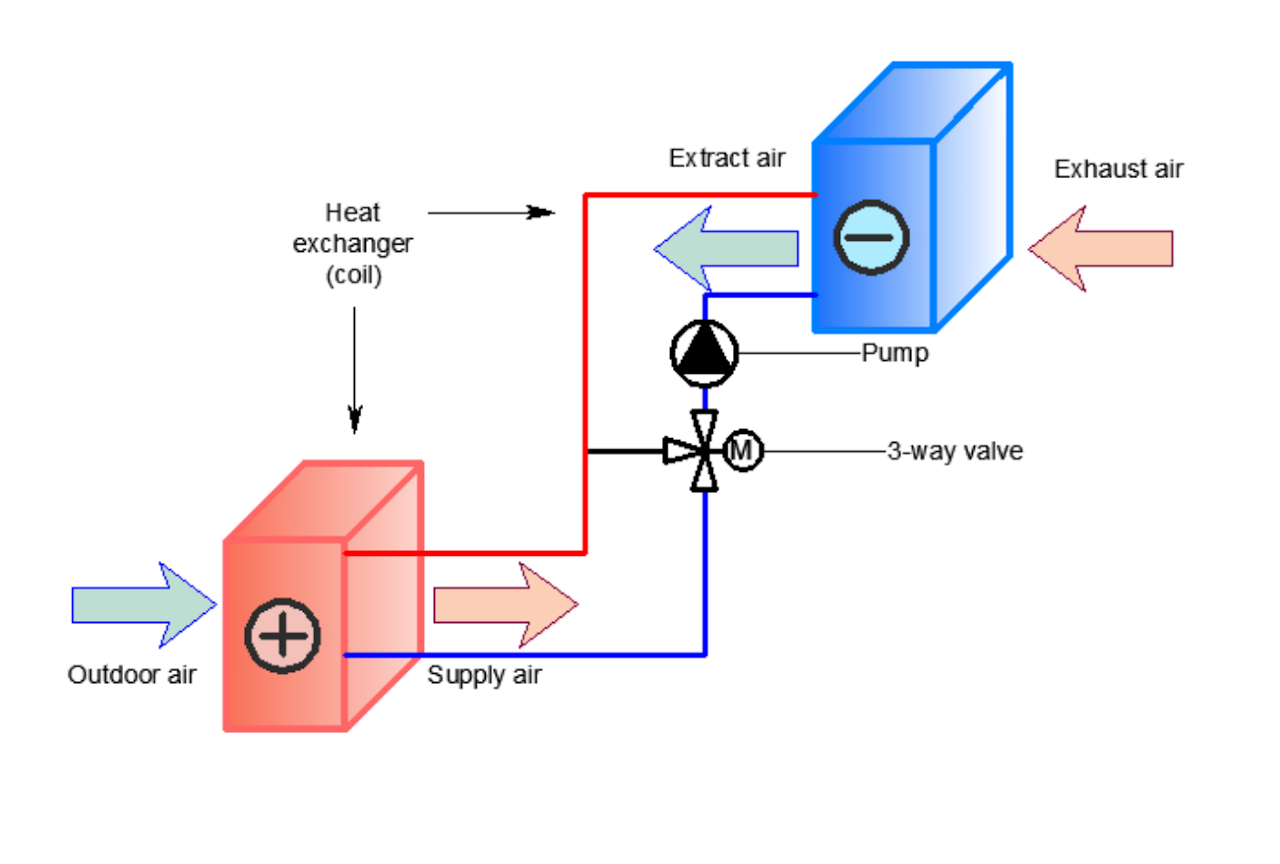
A runaround system connects a coil in the exhaust airstream to a coil in the outside-air stream with a pumped water or water-glycol loop. Because the air streams remain physically separate, it suits hospitals, laboratories, indoor pools and industrial facilities where a wheel or plate exchanger may be impractical or create a cross-contamination concern.
Compare net annual recovery rather than coil effectiveness alone. Include coil pressure drop, pump energy, fan penalties and the hours when recovery is available. Typical results sit within a broad 40–70% range; a published TPCE study found annual recovery of about 65% when an efficient runaround loop was paired with a variable-capacity low-temperature heat pump.
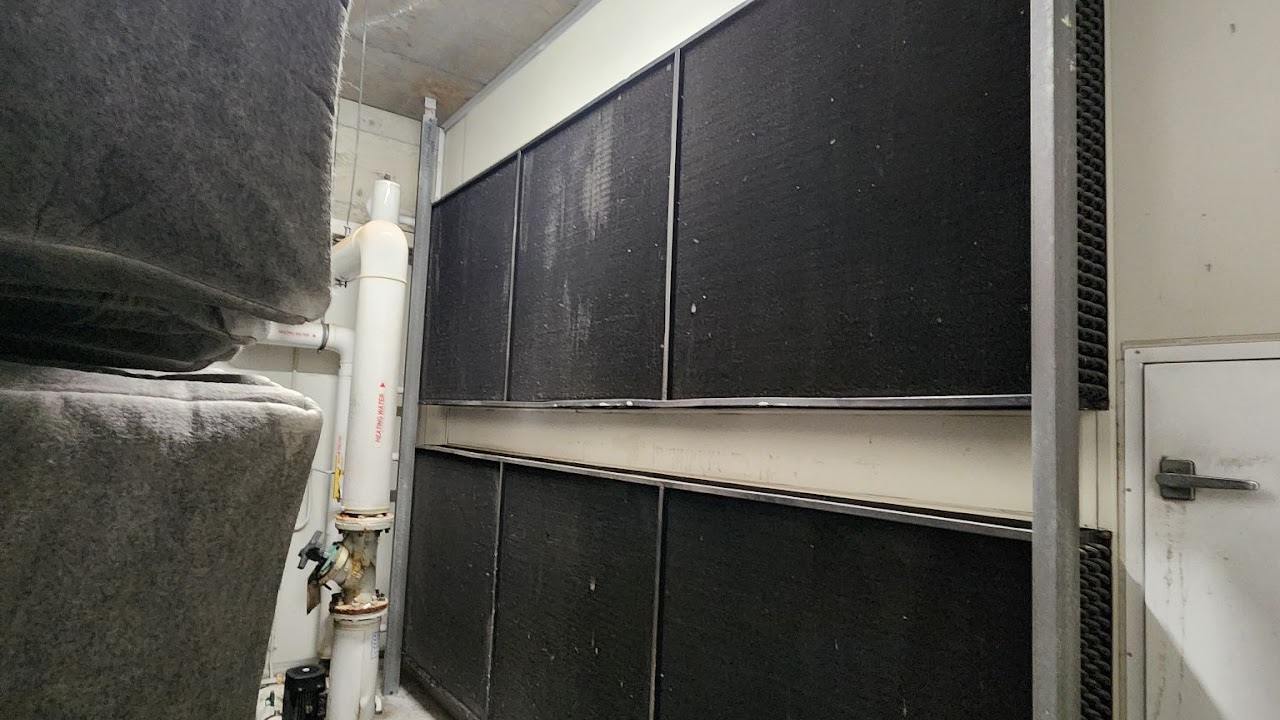
Fluid selection and controls can make or break the result. Use glycol only where climate or shutdown conditions require it, allow for viscosity and heat-transfer penalties, provide air and dirt separation, and control pump speed from measured demand. Coil face velocity, circuiting and cleanability also need attention where pool or process exhaust is corrosive.
Verify recovery with simultaneous measurements on both air streams and the water loop. Trend air temperatures, fluid temperatures, flow and pump power across stable operating periods. This checks the energy balance and helps identify bypass leakage, incorrect valve position, fouled coils or a pump operating away from its intended duty.
TPCE's published project experience includes exhaust-air heat recovery efficiencies up to 75%, depending on configuration, and a large indoor-pool application with an estimated three-year return on investment. These outcomes rely on coordinated design temperatures, coil selection and circulating-pump duty rather than simply adding two coils to an existing system.
Runaround recovery is particularly relevant where high outside-air rates create sustained energy loss: natatoriums, hospitals, pharmaceutical and food facilities, laboratories and manufacturing spaces. It is also adaptable to retrofit work because the two air handlers do not need to be adjacent. Check whether the facility has separated air streams, strict hygiene requirements, high ventilation demand and sufficient annual operating hours to support the investment.