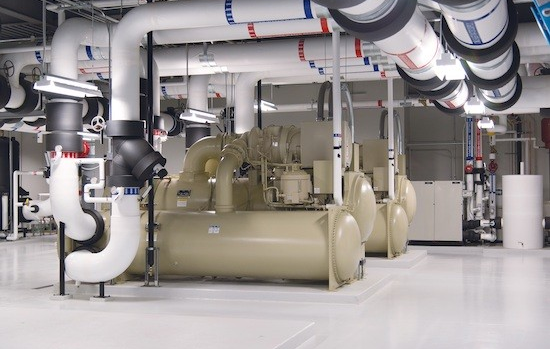
A chilled-water bypass may maintain minimum flow through chillers or pumps, hydraulically separate circuits, regulate temperature, protect equipment during changing demand, or isolate delicate coils during flushing. Its correct function depends on system topology and location. An undersized, oversized or poorly controlled bypass can waste pumping energy, create low delta-T problems or leave plant below its safe operating flow.
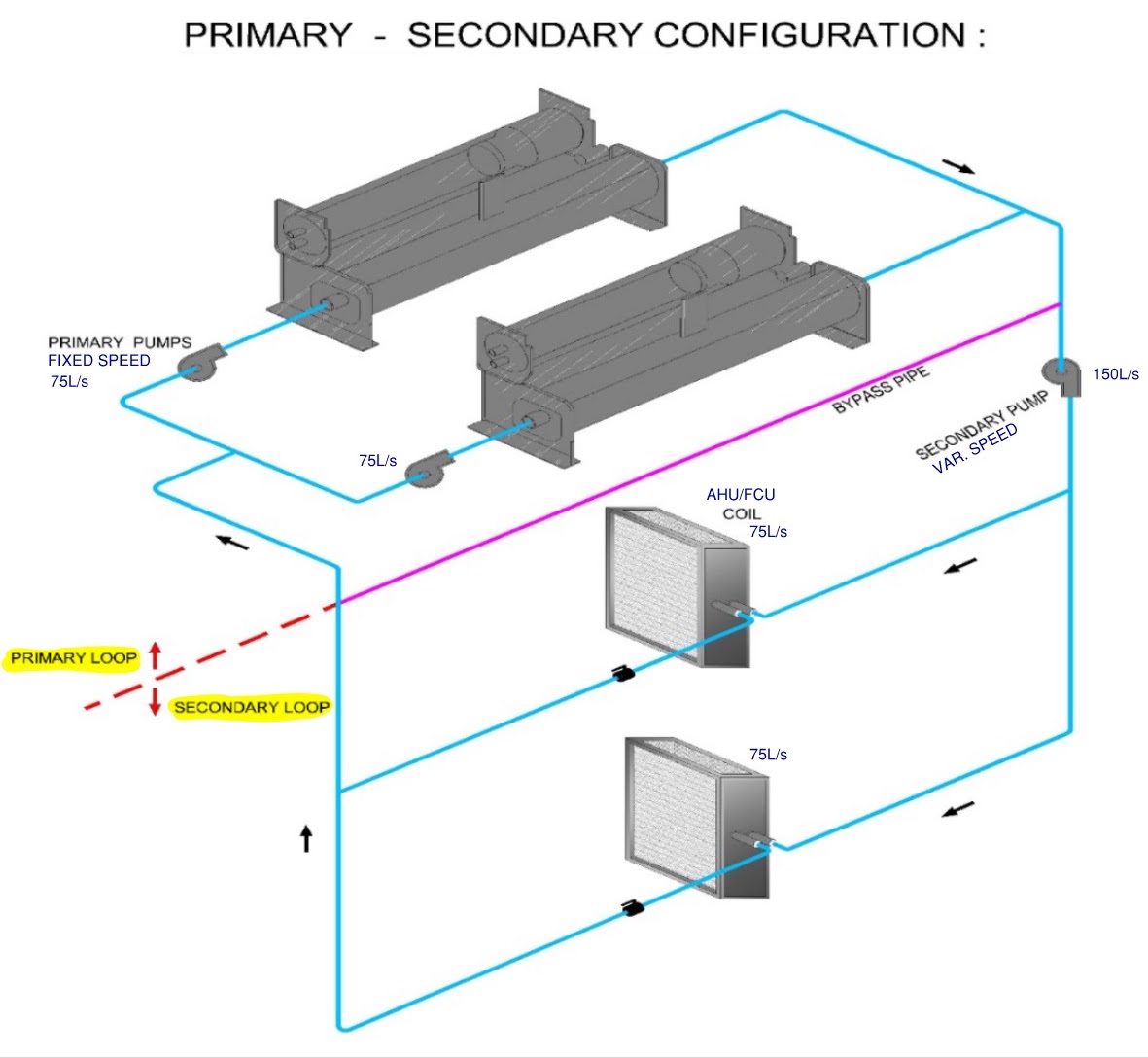
In a primary-secondary system, the decoupler absorbs the difference between constant primary production flow and variable secondary demand. In TPCE's example, two 75 L/s primary circuits remain enabled while secondary demand falls to 112.5 L/s, leaving 37.5 L/s through the common pipe. If one chiller stopped, only 75 L/s would remain and the secondary demand would not be met.
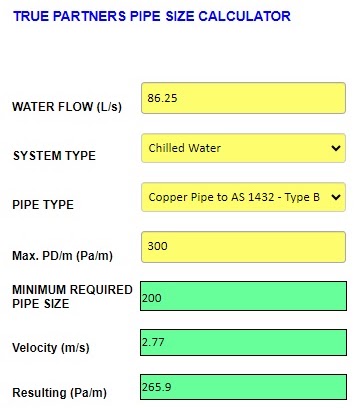
The decoupler should provide very low hydraulic resistance so primary and secondary pumps do not unintentionally operate in series. TPCE uses an indicative limit of 300 Pa/m and about 5 kPa total header loss. Full decoupler flow may be checked at roughly 115% of the largest chiller flow; for a 75 L/s machine, 86.25 L/s at 300 Pa/m gives an indicative DN200 steel decoupler using the TPCE pipe-sizing tool.
Variable-speed secondary pumps also have minimum operating speed. For a 75 L/s pump selected at 1450 rpm with a recommended minimum of 500 rpm, the minimum flow is about 25.8 L/s. If the smallest active load requires only 20 L/s, the remaining 5.8 L/s needs a path through three-way valves or a dedicated bypass. Size this bypass from pump minimum flow minus the smallest operating-zone flow, then check pressure loss.
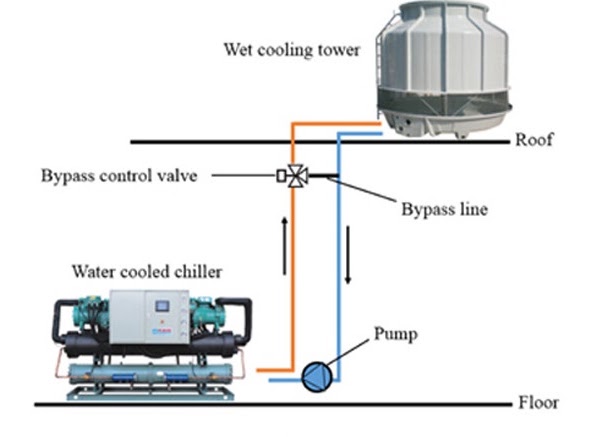
In a primary-variable system, a modulating bypass protects both pump and evaporator minimum flow when terminal demand falls. Water-cooled chillers may also need a condenser-water bypass where tower water drops below the manufacturer's lower limit, often around 15–18°C. Routing warm condenser outlet water back toward the inlet helps restore an acceptable entering temperature in cold weather.
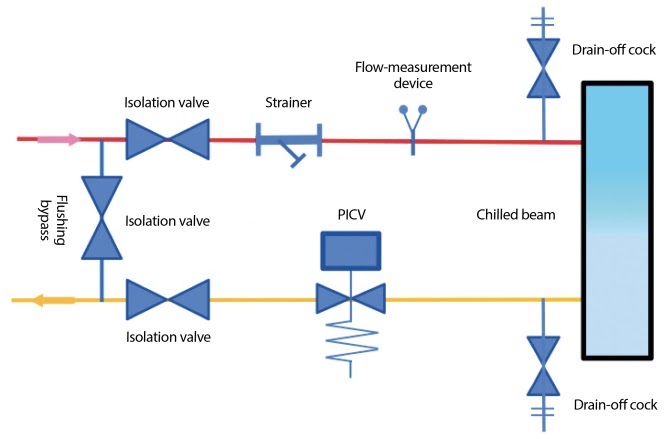
Temporary or permanent bypasses at AHUs and FCUs are also important for flushing. New pipework can contain debris that damages or blocks thin copper coils, so the system should be flushed with coils isolated. Commissioning must then confirm bypass valves return to their intended operating position and that minimum-flow control, differential pressure and chiller staging behave correctly across the full load range.